Commentaries on the Outcome of Haiti’s November 28 Election
* Don’t blame Haitians for election fiasco
Op-ed in Toronto Star, by Roger Annis and Kevin Edmonds, Wednesday December 1, 2010
* The Real Problem With Haiti: Confused line of accountability in post-coup Haiti is no mistake but a convenient shield By Jean Saint-Vil, Gatineau Quebec Monday, November 29, 2010
* In Haiti, "International Community Doesn't Know Which Way to Turn" By Roger Annis, Canada Haiti Action Network, December 1, 2010
* Haitian Election: Don't Let Fraud Prevail Editorial in Toronto Star, Tuesday November 30, 2010
* Haitians should let the runoff run Editorial in Globe and Mail, Wednesday, December 1, 2010
* Haiti After the Vote Editorial in New York Times, Tuesday, November 30, 2010
Don’t blame Haitians for election fiasco
By Roger Annis and Kevin Edmonds
The following article appears on the op-ed page of the Toronto Star, Canada’s largest circulation daily newspaper, on Wednesday, December 1, 2010.
http://www.thestar.com/opinion/editorials/article/899382--don-t-blame-haitians-for-election-fiasco
Photo: A child holds an unmarked ballot, one of thousand left on the floor of a polling station in Port-au-Prince.
Those who counselled against holding a national election in Haiti in the midst of a catastrophic humanitarian crisis will take no comfort in the debacle it became. Our thoughts rest squarely with the tens of thousands of people afflicted with cholera, and the hundreds of thousands of earthquake victims still without shelter, clean water and hope. How much suffering could have been alleviated with the tens of million of dollars spent on a wasted electoral exercise?
The image of the brave and resilient Haitian people will inevitably be stained by what the world has witnessed. Haiti, we are told by so many uninformed commentators, is hopelessly rife with “corruption,” “fraud” and “violence.” But that’s not correct and it’s not fair.
Yes, there was no shortage of electoral fraud on display on Nov. 28. But it’s not true that this is the hallmark of elections in Haiti. The country has held four successful presidential elections in the past 20 years.
To achieve the first of those, in 1990, the people sacrificed greatly in a difficult and bloody four-year battle against the country’s wealthy elite. The latter sought to recover what was lost with the overthrow of the Duvalier tyranny in 1986 by transferring political rule to the ousted dictator’s army. Ultimately, that failed. But not without a high human toll. No one knows more the value of a free and fair election than ordinary Haitian people themselves.
The current election was imposed on Haiti, courtesy of Washington, Ottawa, Paris and the UN Security Council. The dust had barely settled from the earthquake when they began to press for it. They footed the bill, to the tune of at least $25 million. They are the ones to be held accountable, for there was no shortage of voices in Haiti and abroad crying foul and calling for a different political course.
Why were these voices not heeded? Sadly, Nov. 28 was the latest step in a long and protracted effort by Haiti’s elite and the wealthy powers of the world to disenfranchise the Haitian people and strip them of their national sovereignty.
Following 10 years punctuated by a military coup and incessant foreign interference, the disenfranchisement effort resumed in earnest following the election in 2000 of a government of social reform, headed by president Jean-Bertrand Aristide. The elite opposition boycotted the election, but to little avail. The people voted overwhelmingly for Aristide. His party, Fanmi Lavalas, won 72 of 83 parliamentary seats.
Impartial observers declared the election fair. But the opposition called for a boycott of aid and assistance to the government, the opening shot in a protracted drive to overthrow it. The U.S., Canada and Europe obliged, pressuring international financial institutions to withhold aid funding. One of the victims of the aid embargo, as documented by Partners in Health in a comprehensive study in 2008, “The Denial of the Right to Water in Haiti,” was a government plan to build water treatment facilities in the very Artibonite region where cholera broke out.
Four years later, the elected government was overthrown in a bloody paramilitary assault that received political as well as military backing from the U.S., Canada and France. The much-hated UN Security Council mission called MINUSTAH was created in May of that year.
In the 2006 election, a clumsy effort was made to steal the result from the presidential candidate favoured by the popular majority, René Préval. The people accepted him, reluctantly, as a stand-in for Fanmi Lavalas because the party’s leaders were either in exile (Aristide) or in prison (Jean Juste, Auguste, Neptune, many others).
But even mild-mannered Préval was too much for the elite to stomach. They tried, but failed, to block his election. Regretfully, he became the pliant president they wished for, holding down, for example, the factory minimum wage, and failing to aggressively apply the laws of eminent domain against specious landowners following the earthquake so that temporary shelter could be constructed more rapidly.
In 2009, the Préval-appointed electoral council issued its first formal ban against Fanmi Lavalas participation in elections, in the partial senate election that took place in April and June. As a result, voter turnout was less than 5 per cent. The council repeated that ban in the election that was supposed to take place in February 2010 and rolled that decision forward to apply to this latest one.
So how can Haiti recover from this foreign-sponsored electoral disaster?
First, as if it needs stating, the candidates calling for the election to be cancelled should be heeded. As well, a new Provisional Electoral Council needs to be formed. Haitians have been demanding this in countless demonstrations over the past seven months; those candidates now crying foul are doing so late in the game.
Second, the foreign powers in Haiti should respect the sovereign will of the country and its institutions in the reconstruction effort. Haitians need social cohesion and a rights-based plan for national recovery. Foreign assistance could help such a process by cooperating with Haitian authorities and bending over backwards to assist the creation of public services and other social institutions that strengthen Haitian capacity.
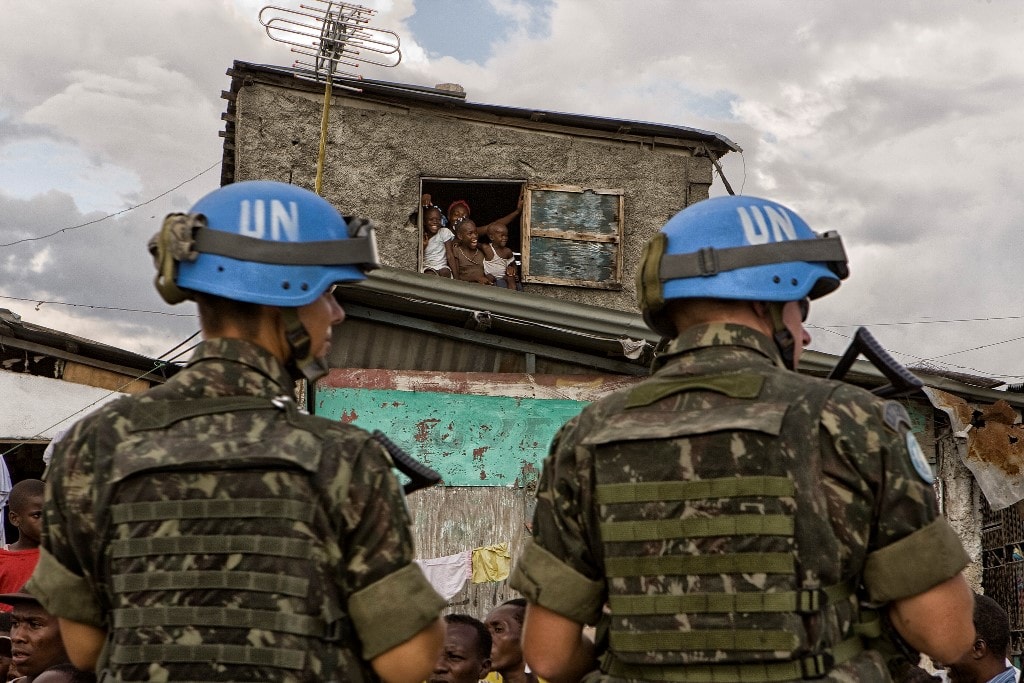
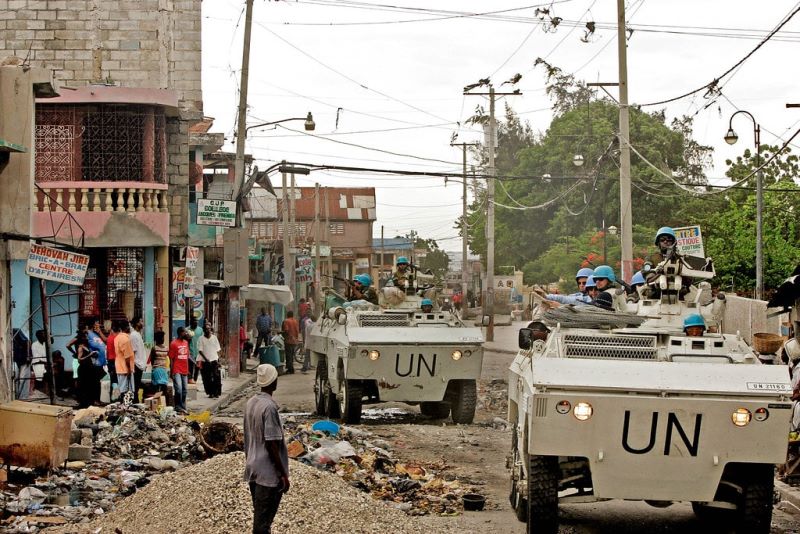
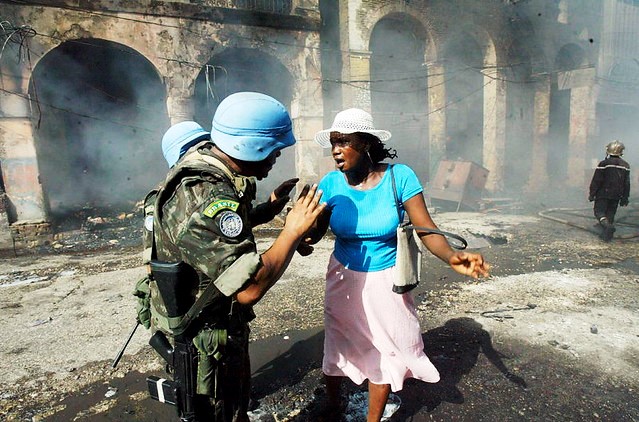
Third, MINUSTAH needs to prepare an orderly departure from the country. It was already reviled by many Haitians as symbolizing the loss of sovereignty in 2004; now it stands accused of being the likely source of the cholera outbreak, via its Nepalese contingent, and of backing a fraudulent and undemocratic election.
Finally, and above all, the humanitarian crisis requires urgent attention and much more resources. Notwithstanding the sacrifices and heroism of so many Haitians and their allies, the international aid effort has proven flawed and insufficient. A renewed influx of resources and commitment is required.
Kevin Edmonds was an observer of the Haiti election and is a graduate student at McMaster University’s Globalization Institute. Roger Annis is a coordinator of the Canada Haiti Action Network. He lives in Vancouver.
This letter to the editor was published the following day in the Star:
Re: Don't blame Haitians for election fiasco, Opinion, Dec. 1
This article states that this current election was imposed on Haiti by foreign powers in the aftermath of the earthquake and in the midst of the terrible cholera epidemic.
Would this be another illustration of Naomi Klein's “shock doctrine,” whereby powerful forces take advantage of a disaster and the resulting disorientation of the populace in order to push forward an unpopular agenda?
Linda Genova, Toronto
THE REAL PROBLEM WITH HAITI:
Confused line of accountability in post-coup Haiti is no mistake but a convenient shield
By Jean Saint-Vil, Gatineau Quebec
Monday, November 29, 2010
http://www.canadahaitiaction.ca/content/real-problem-haiti-jean-saint-vil
Is it not criminal to organize a sham election whereby $29M was spent supposedly on elections logistics yet the names of people killed since the January earthquake were not even removed from the electoral lists? Meanwhile, since October, scores of human beings are dying of cholera which experts now confirm have been imported to the island, likely by the foreign troops. Yet, in these elections, the people are denied the opportunity to vote for the most popular party whose leader (Aristide) is kept in exile. How is this any better than the election recently held in Burma?
I keep reading "we gave millions to Haiti”. We did no such thing, folks! We gave millions to CIDA, U.S. AID, Oxfam, The Canadian Red Cross, the U.S. Red Cross, the International Red Cross etc... We must garner the courage to ask those who received this money what was done with it. Some did good works. Some obviously did not! If you transfer money from your left hand to your right hand, it is foolish and cynical to keep asking your neighbour why he does not look any richer for it.
As I watched the painful electoral mess yesterday, I am mindful of the shocking statement made by the Assistant Secretary General of the OAS, in front of myself as well as several other witnesses at Haiti’s Hotel Montana, on December 31, 2003: “The real problem with Haiti” said Luigi Einaudi, “is that the ‘International Community’ is so screwed up & divided that they are actually letting Haitians run Haiti.” Less than two months after Einaudi uttered these words, U.S. Marines entered the residence of Haiti’s president, while Canadian RCMP soldiers secured the airport to facilitate the coup and occupation of Haiti. Since that fateful night, Haitians are no longer running Haiti and the bloodbath the foreign invaders claim to have intervened to avoid has reached unprecedented proportions, with full involvement of the UN forces engaged, time and again, in what can only be defined as class and race warfare.
Haitians keep saying every which way they can that Einaudi's assessment was and is wrong. But, what do Haitians know, anyway? We have a "responsibility to protect!", as it is our manifest destiny to do so, right?
So Tarzan after Tarzan keeps proposing and trying ways to solve the "real problem with Haiti":
“The proper solution for the problem of Haiti is creation of an international trusteeship, one that will allow for the institutions of the Haitian state to be rebuilt and to be made effective, prior to transition, under international stewardship, to a fully self-directed democratic state with an effective market economy. However, it is acknowledged that the intervention/ trusteeship solution has been attempted before in Haiti, and it has failed. The long history and unique culture of this country have given the Haitian people a strong sense of independence and nationhood. This poses a considerable challenge to the international community – to develop and implement an approach that will be perceived as legitimate by the Haitian nation, and not one simply imposed by outside powers"..
Incredibly enough, the above quote from the article titled "The Case for International Trusteeship in Haiti" by Major Michael T. Ward is posted on an official Canadian Government website! http://www.journal.forces.gc.ca/vo7/no3/ward-eng.asp
Obviously, Haitians do have problems and Haitians have no choice but to assume responsibility to solve them. Many in Haiti and in its diaspora have been trying desperately to do so for years. But, it would be helpful if everyone could assume the part of responsibility which is theirs in the current situation. For, let it be clear, this failure which we all observed on November 28, 2010 is, in no small part, that of the post-coup Haitian regime and of its U.S., Canadian and European sponsors. Since the 2004 coup, Haiti has had puppet "governments" put in place to shield from accountability the international puppet masters who are really running the show.
The hypocrisy must and will end! (with or without the assistance of "mainstream" media).
In Haiti, "International Community Doesn't Know Which Way to Turn"
By Roger Annis, Canada Haiti Action Network, December 1, 2010
The big powers that pressured for the November 28 election and then paid for it are today left not knowing, "which way to turn," according to Montreal La Presse columnist Agnes Gruda.
She writes in the November 30 edition that she witnessed Sunday's election and the two weeks leading up to it, and after listening on Sunday to CARICOM's Colin Granderson urging Haitians to get out and vote, she concluded, "Colin Granderson does not live on the same planet as I." She said that many Haitians wanted to vote but were prevented from doing so by an unbelievable combination of a poorly organized election and a regime determined to have its preferred candidate prevail. http://www.cyberpresse.ca/chroniqueurs/agnes-gruda/201011/30/01-4347603-...
She concludes her article by saying that a delicate showdown is underway in Haiti. "On the one side, there is a threatened regime that wields some power. On the other, some candidates who can rely on the people's anger. And between them, an international community that no longer knows which way to turn. And which is wondering to what degree it can support a hated regime without risking a social explosion -- the first signs of which are already being felt in some parts of the country. "
Truth be told, the big powers lording it over the Haitian people can hardly be considered to be "between" the governing regime and the people; they ARE a constituent part of the regime. Like the Préval government, they are now engaged in a delicate dance to extricate themselves from a political disaster of their own making.
Where does the government of Canada stand? Canada's largest circulation daily newspaper published a short, sharp editorial yesterday, “Haiti election: Don’t let fraud prevail" (reprinted below).
UN officials have gone out on a limb to defend the election. Yesterday, in a panel discussion on CBC Radio One's The Current, UN Deputy Special Envoy on Haiti Nigel Fisher gave a strong defense (http://www.cbc.ca/thecurrent/episode/2010/11/29/nov-2910---pt-2-haiti-el...). The OAS/CARICOM observation mission (including the aforementioned Colin Granderson) issued a statement also backing the election. But it contains reservations that bizarrely contradict their argument in favor. http://www.canadahaitiaction.ca/content/statement-oascaricom-mission-ele....
Fisher acknowledged on the CBC panel that there was, "No real grassroots political organizing represented in the election." That was assured by the banning from the election of the largest grassroots party in Haiti, Fanmi Lavalas, by the country's appointed and unconstitutional electoral council, with the backing or acquiescence of Mr. Fisher and his MINUSTAH police/military occupation force.
The UK reports on November 30 that claiming election fairness seems a “bold step” considering many of the infractions recorded in the mission report. One election observer attached to a diplomatic mission told the Guardian they witnessed party officials actually filling out ballot forms on behalf of voters and no staff from the OAS being present for the count matching voters to votes at a separate location.
When asked why there were so few staff at counts, OAS spokesman John Enright told the paper, "Short answer, we are 118 observers across the entire country." He said 59 two-person teams were present during counts at polling stations. Estimates put the total number of voters at over four million.
Among the "weaknesses" stated in the OAS/CARICOM report were, "Inability of many voters to find the correct voting centre and/or polling station; inability of voters to find their names on the electoral registers posted up outside the polling stations and instances of voter manipulation – repeat voting of some voters facilitated by complicit poll workers and unidentified party agents."
But after consideration, the mission concluded that it "does not believe that these irregularities, serious as they were, necessarily invalidated the process."
Last week, Canada's largest circulation daily, the Globe and Mail, editorialized in favor of the election. On November 29, it published a news article very damning of the exercise. Today, it has penned an editorial endorsing the outcome (reprinted below). It cites the country’s discredited electoral commission and the aforementioned OAS/CARICOM report as arguments for the election.
As if warming up to the editorial, the Globe published a letter yesterday projecting a bizarre future for Haiti--complete foreign takeover. Written by a David Lieber of Montreal, it says, "Canadian Ambassador to the UN, John McNee, should table a motion in the General Assembly for Haiti to be put under United Nations trusteeship for four years." This is the only letter on Haiti that the newspaper has published throughout the run-up to the election.
In Mr. Lieber's fantasy world, former Governor General Michaelle Jean would head the country's reconstruction committee, Stephen Lewis would serve under her, and Paul Martin would direct its finances. One can only imagine what Her Excellency and Messrs Lewis and Martin think of the Globe's, er, Mr.Lieber's, ravings.
Sane people like me can't get letters or commentaries published in the Globe and Mail for love or money. But you can read some that were sent to the editor anyway, here on the Media Watch page of the CHAN website, http://www.canadahaitiaction.ca/mediawatch.
Canada's government is caught in an impossible squeeze. It wanted an election that would deliver a pliant government to it and its allies. It paid $6 million to get it. But all of Canada watched the predictable unfolding of the electoral spectacle and is aghast. The Toronto Star editorial expresses the view of most people who would have seen or heard the news: Don't let fraud prevail! So what to do?
Perhaps the backing off of two of the leading candidates--Martelly and Manigat--from their call on election day to cancel the whole thing offers an out. Each candidate changed its stance on condition, of course, that he or she be declared one of the two candidates to pass onto a second round of voting. They want a vote count that would deliver this result. But how would that look to the world?
Toronto Star Editorial
Haitian Election: Don't Let Fraud Prevail
November 30, 2010
http://www.thestar.com/opinion/editorials/article/898698--haitian-election-don-t-let-fraud-prevail
Stuffed ballot boxes. Polling stations with no ballots. Dead people on the voters list. Living people left off it. People voting more than once. The weekend election in Haiti had ample evidence of fraud or incompetence, or both.
No wonder, then, that Haitians took to the streets in protest even before the polls were formally closed on Sunday night, and that a dozen of the presidential candidates got together to denounce the “massive fraud.” Only Jude Celestin, the candidate backed by the outgoing president, seemed content with the way the election was run.
For the international community, including Canada, the troubled election poses a real dilemma. If the outside world endorses the vote, that could be seen as support for a government that a large number of Haitians view as illegitimate. But if endorsement is withheld, it could contribute to instability at a time when Haiti is already reeling and needs stable government.
"It is critical that election irregularities be addressed in a timely, transparent and thorough manner," said Lawrence Cannon, Canada's foreign minister, in a hand-wringing statement on Monday. That seems the least we can insist upon in the wake of this deeply flawed election.
Globe and Mail Editorial:
Haitians should let the runoff run
Wednesday, December 1, 2010
http://www.theglobeandmail.com/news/opinions/editorials/haitians-should-let-the-runoff-run/article1819616/
There will never be a perfect time to hold elections in Haiti, a country struggling with crippling poverty, post-earthquake reconstruction and a deadly outbreak of cholera.
The presidential candidates who denounced Sunday’s elections should drop their demand that results be annulled. Twelve of 19 candidates accused outgoing President René Préval of carrying out a plan to steal the election for his heir apparent, Jude Célestin. But Tuesday, the ruling party declared they will accept defeat if they lose.
And while Haiti’s Provisional Electoral Council (CEP) conceded that ballots were destroyed or damaged at 56 of 1,500 voting centres, they found that fraud was not widespread, a claim echoed by the Organization of American States. One CEP member wondered whether the dissenting candidates would continue their opposition if the results – to be announced on Dec. 20 – end up favouring them.
“The denunciation of political fraud can be seen as a political calculation by the opposition, so they will have a claim if they’re not successful,” observes Carlo Dade, executive director of the Canadian Foundation for the Americas, an Ottawa think tank. And indeed, both Michel “Sweet Micky” Martelly, a musician, and Mirlande Manigat, a former first lady, backed away from their denunciations this week, as word leaked out that they may be the leading contenders.
Haiti desperately needs an engaged president who can work with international donors – including Canada – to co-ordinate the $10-billion in aid pledged for reconstruction. Helping to contain the spread of cholera is also key.
Past elections in Haiti have been marred by accusations of fraud. And this time, there were logistical challenges related to last January’s earthquake, which claimed 250,000 lives, left 1.5 million people homeless and obliterated voting lists and polling stations.
Since a runoff between the two front-runners is a virtual certainty, Haitians will have another chance to exercise their democratic right to choose a new leader in January – and candidates another chance to share their vision of how to rebuild their country. Haiti deserves good governance, and delaying the election won’t accomplish this.
New York Times Editorial:
Haiti After the Vote
November 30, 2010
http://www.nytimes.com/2010/12/01/opinion/01wed2.html?_r=2
Sunday’s elections in Haiti were sullied by low turnout, polling-place confusion and accusations of voter intimidation, ballot stuffing and other fraud. But for all those flaws, international observers from the Organization of American States and the Caribbean Community agree with Haiti’s national election council, which has declared that the election was fundamentally sound.
Twelve of Haiti’s 18 presidential candidates were unpersuaded on Election Day when they declared — without evidence, and before the polls had closed — that the voting had been hopelessly tainted and should be canceled. Two of them — Mirlande Manigat, a former first lady, and the musician Michel Martelly — backed away on Monday, perhaps because they seem to be the two front-runners heading toward a runoff in January.
Re-running elections this large — not just for president, but for 11 members of the 30-member Senate and the entire 99-member lower house of Parliament — would lead to months more of confusion and government inaction. Unless compelling evidence of fraud is found, it is not necessary and clearly not in Haiti’s interest.
Right now, election officials need to press ahead with an open and honest vote count. International monitors need to keep a close watch and quickly revise their assessment if they see serious problems.
Preliminary results are expected Dec. 7. If no presidential candidate gets 50 percent of the vote — likely given the size of the field — then everyone involved needs to learn from Sunday’s problems and work a lot harder to minimize chaos in the next round. The election council needs to do a much better job of getting out the word on where and how to vote. Poll workers need more training.
Eleven months after the devastating earthquake, more than a million people are still displaced. The country is also struggling to contain a cholera epidemic. The new government will have to clear the many roadblocks that have slowed the rebuilding effort. And it will have to tackle a host of other reforms: modernizing the electoral system and constitution; unclogging bureaucracies and legal requirements that stifle business and investment; overhauling cruel and ineffective courts and prisons.
Haitians, whose patience has already been grievously tested, need to believe that their next leaders were legitimately elected. That appears to be the case. Haitians also need for those leaders to get on with the business of governing and rebuilding. There is no more time to waste.