The parliamentary coup d'etat in Paraguay--three articles

Three articles enclosed:

Allies criticize Paraguay over ouster of president

By Pedro Servin and Peter Orsi, Associated Press, published in the Globe and Mail, June 25, 2012

Ousted Paraguayan President Fernando Lugo fought back Sunday against the politicians who engineered his dismissal, setting up an alternative government and pledging to upstage Paraguay's new leaders at an upcoming regional summit. Mr. Lugo's new stance marked a dramatic about-face from just two days earlier when it seemed he would go meekly into retirement after the country's Congress

overwhelmingly voted to impeach him. Since then, Mr. Lugo has received a flood of support from South American nations, including the Mercosur trade bloc, which suspended Paraguay's membership and barred the country from taking part in a gathering set to start Monday in Mendoza, Argentina.

Mercosur nations expressed "their most energetic condemnation of the rupture of democratic order" in Paraguay, read a joint statement issued by the Argentine Foreign Ministry. Meanwhile, Venezuelan President Hugo Chavez said his government will cut off fuel sales to the poor South American country. Venezuela had become a key supplier to Paraguay as Mr. Chavez built close ties with Mr. Lugo, a moderate leftist.

The developments set back efforts by newly sworn-in President Federico Franco, who over the weekend mounted efforts to justify Lugo's removal and fend off criticism from regional leaders calling the action an institutional coup.

Earlier Sunday, Mr. Franco said newly appointed Foreign Minister Jose Felix Fernandez would represent Paraguay at the Mendoza summit, with heads of state gathering there on Thursday. "He will take charge of seeking to solve the discrepancies with countries that are our neighbors and friends," FMr. ranco said after attending Sunday Mass. There was no immediate comment from his government after Paraguay's suspension.

Mr. Lugo also said he will attend the summit and even hand over Mercosur's rotating presidency to Peru next week, months before it is due to switch in November. "I will not collaborate with Franco's government because it is bogus. It has no legitimacy," he said. Earlier he denounced his ouster as a "parliamentary coup."

His former Cabinet ministers announced that they were establishing a parallel government to continue Mr. Lugo's policies and would meet on matters of state Monday. "President Lugo will be with his ministers to take decisions and then inform what those determinations were," said Augusto Dos Santos, Lugo's minister of social communication.

Last week Mr. Lugo said he would respect the outcome of his impeachment proceedings. After his rapid trial and conviction in the Senate on Friday, he disappeared from sight, and an aide said he was focused on moving his things out of the presidential palace.

But he came out swinging shortly after midnight Sunday, showing up at an emotional demonstration where he told protesters his truncated presidency was targeted because he tried to help the South American nation's poor majority. Asked whether he had any hope of retaking office, Mr. Lugo exhorted his followers to remain peaceful but suggested that national and international clamor could lead Paraguayan lawmakers to reverse his impeachment. "In politics, anything is possible," he said.

Mr. Lugo was elected four years ago, ending 61 years of rule by the conservative Colorado party, on promises of agrarian reform to help the country's many poor and landless people, but his allies increasingly turned against him in recent years.

Ultimately, a deadly clash between police and landless protesters cost Mr. Lugo all but a handful of votes in both legislative houses. Police were attempting to evict about 150 farmers from a remote forest reserve that is part of a large estate. Six police officers, including the brother of Lugo's chief of security, and 11 farmers died in this month's clash.

Mr. Lugo's opponents blamed the president. Advocates for the farmers say the landowner, a politician, had used his influence to get the land from the state decades ago, and say it should have been put to use for land reform.


DOWN WITH THE COUP IN PARAGUAY!

We support the people of Paraguay

Statement of the Executive Committee of the 'O Trabalho' current of the Workers Party (PT)

Sao Paulo, Brazil, June 23, 2012, 3 pm--The Paraguayan Senate yesterday [June 22] completed a coup d'etat in deposing the elected president, Fernando Lugo, during a 32-hour farce of a "constitutional trial."

Only nine months away from the next elections, the formal accusations against Lugo -- allowing demonstrations by the army's youth, subjecting the military to the "carperos" (landless workers), doing little to fight armed groups in the countryside and, as well, "bad performance" -- confirm the social content of his ouster. In fact, the episode that led to the deaths of 11 "carperos" and six policemen was only a pretext.

It was rather a coup by the landowning oligarchy with support from U.S. imperialism. It was right that the Brazilian government, as well as the Workers' Party (PT) and the Confederation of Workers (CUT), denounced the coup.

Yesterday, a few hours after the coup, the spokesman for the U.S. State Department declared, "The United States recognizes the senate vote for 'impeachment'" and cynically asked the people to remain "calm." The Paraguayan bishops even demanded Lugo's resignation!

Despite the arrival of a dozen chancellors from the UNASUR countries (Union of South American Nations), led by the Brazilian "patriot" minister, to "mediate the conflict," the United States recognized Federico Franco, the vice president of the Liberal Party. Franco, elected by the same electoral alliance as Lugo (which defeated the Colorado Party that had governed the country for decades), is now the instrument of both parties, which united to carry out the coup.

Nevertheless, Lugo was victimized by his own policy of "colligation" (or coalition) with the oligarchs and employers, delivering his office without calling on the resistance of the thousands who waited in Congress Square. For the people, the coup means the installation of a government openly hostile to their demands -- that of beginning the agrarian reform that Lugo had not yet carried out.

A warning to the Brazilian people and all of Latin America

WARNING: In 2009, a coup in Honduras deposed democratically elected President Manuel Zelaya. It was initially condemned by the governments in the region, but later, under pressure from the United States, it was accepted by the OAS (Organization of American States).

WARNING: The Brazilian government of Dilma Rousseff has not yet recognized the new government, as is the case with other governments (*).

WARNING: When peoples confirm their will to recover their sovereignty and to control their national riches with agrarian reform and nationalizations, they only can count on their own forces to bring to fruition their social and national aspirations.

Today, June 23, the streets of the capital city of Asuncion are deserted, the buses aren't running, businesses are closed and classes have been suspended. Yesterday, 10,000 protesters in the plaza near Congress Square, who had been brought together by CUT-Auténtica (among other organizations), decided, before breaking up, to form the Front for the Defense of Democracy. The front, composed of organizations of farmers, unions, students and the "homeless" will organize the resistance, including general strikes and land occupations.

ALL SUPPORT FOR THE FIGHT OF THE PARAGUAYAN PEOPLE AGAINST THE COUP!

(*) In a note from the Ministry of External Relations - known as Itamaraty - the Brazilian government that night condemned the dismissal and recalled its ambassador to Paraguay.


3. Paraguay's parliamentary coup and Ottawa's imperial response

By Todd Gordon and Jeffery R. Webber Published on The Bullet, web bulletin of Socialist Project, No. 657, June 26, 2012 http://www.socialistproject.ca/bullet/657.php#continue

A soft-coup has ousted centre-leftist Fernando Lugo from the presidency in Paraguay and replaced him with Vice-President, but long-time political enemy, Federico Franco of the inaptly named Partido Liberal Radical Auténtico (Authentic Radical Liberal Party, PLRA). Using as pretext a bloody confrontation last week between landless peasants occupying a large-landholding in Curuguaty, near the Brazilian border, and police forces sent to violently dislodge their encampment, a farcical political trial was carried out last Friday by the opposition-controlled Congress in which the President was accused of having failed to maintain social order in the country.[1]

Lugo, democratically elected in April 2008, and with over a year left in his tenure, was given less than 24 hours to prepare his defence, and only two hours in which to present it at trial. “Paraguay used a mechanism contemplated in the Constitution,” remarked Argentine ambassador to Paraguay Héctor Timerman, explaining why his government considers there to have been a rupture in the democratic order in its next-door neighbour, “but it was applied in such a way as to violate not only the spirit of the Constitution but all constitutional practice in the democratic world.”[2] Recognizing the summary proceedings as little more than the burlesque theatrics of the old Paraguayan oligarchy, Lugo refused to dignify the Congress with his presence, initially accepting his forced resignation when no other options appeared available.

Lugo, an ex-bishop inspired by liberation theology, ran in 2008 on a campaign of agrarian reform, wealth redistribution through tax increases on agro-industry, and anti-corruption in South America's second poorest and most unequal country. His victory, with over 40 per cent of the popular vote, put an end to the 61-year, one-party rule of the conservative Partido Colorado (Colorado Party, PC). The PC took over in 1947, but is most famously associated with the anti-communist dictatorship of General Alfredo Stroessner, who assumed the presidential helm through military violence in 1954 and gripped onto office until 1989, when he was overthrown in a coup designed by his son-in-law Andrés Rodríguez, one of the most notorious drug traffickers in the country.[3] For 61 years the Paraguayan state had been the clientelist fiefdom of this marauding band of outlaws, sustained in equal measure by fierce repression and petty handouts to the destitute.

The Economy

Drugs, gun running, and money laundering coexist and overlap with soya and meat exporting as the bases of the Paraguayan economy. A mixed landed elite, of native Paraguayan latifundistas, Brasiguayos (sons of Brazilians born in Paraguay), and, most importantly, absentee Brazilian soya capitalists, control large tracts of the lawless countryside with private armies that have repressed, coerced, and murdered the ranks of an expanding landless peasantry with impunity for decades. The 1990s and 2000s have been especially intense, however, with a massive turn to soya production, and, to a lesser extent, large-scale cattle ranching, both capital-intensive agro-industries driven by China's boom, that have displaced small peasant landholdings en masse, creating an expanding sea of landless rural labourers, and new layers of urban informal proletarians. When Lugo came to office, agriculture still contributed 19.2 per cent of the country's gross domestic product (GDP), more than the 13 per cent in South America's poorest country, Bolivia, and well in excess of the roughly 5 per cent in Argentina, Brazil, and Chile. Less than 60 per cent of the Paraguayan population lives in cities, compared to an urbanization rate of 92 per cent in nearby Uruguay. Industry accounts for a scant 16 per cent of GDP, meaning Paraguay has essentially no industrial fraction to its domestic capitalist class, and only a tiny and beleaguered industrial working-class.[4] The pivot of class struggle has been, more than anything, the question of land. The key players – the landless and the landed.

This class structure and accompanying political system of corruption and coercion in the twentieth and early twenty-first centuries, has been rooted ideologically in a relentless, primitive anti-communism that has managed to outlive all other vestiges of the Cold War. Asunción, the capital, features a giant statue of the Chinese anti-communist leader Chiang Kai Chek. The statue is not easily dismissed as simple artifact, or harmless Manichean trophy from the Stroessner period, if one considers the contemporary Paraguayan media's perennial assaults on Lugo's administration for its alleged communist deviations – in the style of Castro's Cuba, Chávez's Venezuela, Morales’ Bolivia, and Correa's Ecuador.

Catastrophic Equilibrium

After a certain degree of democratization-from-above under the rein of Rodríguez, the early 1990s witnessed the formation of various social movements that would eventually lend political weight to Lugo's candidacy in 2008. The Federación Nacional Campesina (National Federation of Peasants, FNC) was formed in 1991, and was followed shortly thereafter by the formation of the Mesa Coordinadora Nacional de Organizaciones Campesinas (Coordinating Committee of Peasant Organizations – MCNOC) in 1994, which linked in turn to the international peasant movement, Vía Campesina. In 1987, a predominantly urban, feminist organization was formed, called the Coordinadora de Mujeres del Paraguay (Coordinating Committee of Women in Paraguay, CMP), and in 1999, a rural and indigenous women workers’ organization was formed, called La Coordinadora de Organizaciones de Mujeres Trabajadores Rurales e Indígenas (Indigenous and Rural Women Workers Coordinating Committee, CONAMURI). As the uprooting of peasants from the countryside persisted throughout the 1990s, the newly urbanized poor began to create organizations to fight for access to housing, electricity, education, and health services. Out of small-scale, neighbourhood projects national coalitions slowly emerged, such as País para la Mayoría (Country for the Majority, PM) and, most importantly, the Frente Social y Popular (Popular Social Front, FSP).[5]

Many of these multifarious movements of the popular classes found political articulation in a panoply of leftist parties, organizations, and grouplets. Tekojoja, for example, was the name of Lugo's original, tiny political peasant formation. The Guaraní word is meant to capture the reciprocal relationship with the earth and ecosystem that Guaraní indigenous peoples practiced prior to the Spanish conquest, while simultaneously conjuring up the Paraguayan independence struggle against direct Spanish rule and its colonial and class impositions.[6] Almost two dozen leftist political parties, including Tekojoja, managed to unite in the lead up to the 2008 presidential contest under the umbrella of the Frente Guasú (Guazú Front, FG). Or, rather, they managed to unite for the presidential vote, while simultaneously running 11 different slates in the legislative elections. The result was a powerful victory for Lugo in executive office. But with only a few leftist allies in the legislature, the institutional apparatuses of the state were deadlocked from the outset of his administration. The structural compromises ran still further. Frente Guasú, acknowledging that they could not win even the presidential contest alone, had opted to accept Federico Franco of the PLRA as Lugo's vice-presidential running mate. Lugo, meanwhile, infamously played up his centrism as time passed, and toned down all association with meaningful popular liberation of the exploited and oppressed. After assuming the vice-presidency, Franco quickly abandoned Lugo's ship and, together with all but a few temporary Liberal holdouts, began conspiring with other right-wing factions of Congress to ‘legally’ impeach the President under whatever subterfuge proved attainable.

Post-election 2008, therefore, saw the executive in the hands of a defanged centrist, both houses of Congress controlled by the Right, and the judiciary expressing the most retrograde face of the traditional ruling class. In such a scenario, the only opportunity for governability under Lugo, with even modest social reform, would have required the President's open embrace of extra-parliamentary expressions of popular power that had been building in incipient fashion throughout the 1990s and 2000s. “But he did not understand [the scenario] as such,” Atilio Borón points out. “Throughout his mandate he gave in to multiple concessions to the Right, ignoring the fact that no matter how much he favoured them they were never going to accept his presidency as legitimate. Gestures of concession embolden, rather than assuage, the Right.”[7]

Lugo has not touched the system of taxation, much less the entrenched, deeply unequal social-property relations of rural Paraguay. He has at times employed a progressive political discourse, while pursuing a political economy of deep neoliberal continuities – even novelties, such as the privatization of various highways – and a social policy of safe, inexpensive, targeted social assistance programs. Nonetheless, Lugo never took the spectre of agrarian reform completely off the table, nor plans to change the judicial power structure, among other campaign promises of note. Lugo also managed to renegotiate Paraguay's share of the revenue generated from the jointly operated Itaipú hydroelectric dam on the Paraguay-Brazil border, such that Paraguay now receives $240-million (U.S.) annually – public revenue has to come from somewhere, afterall, considering Paraguay's abysmal levels of taxation amount to only 13% of GDP, 80 per cent of which is drawn from indirect taxes rather than hitting the agro-industrial behemoths directly.[8] It might also be mentioned here that Lugo cancelled joint U.S.-Paraguay military training exercises scheduled for 2010 under the innocuous moniker “New Horizons.” The Right understood that his government was not going to implement radical reform, much less socialism, but their biggest fear was that Lugo would help to change the political terrain and overarching balance of forces, would open up space for the growth of an authentic Left, with ever-expanding expectations and horizons for transformative change in the country.[9]

Writing on the Wall

Among other reasons, we know the confrontation in Curuguaty was simply a pretext for the parliamentary coup because this was only the first successful attempt after many failed moves by the Right to impeach Lugo, beginning as early as 2009. “Possibly the Paraguayan Right has learned from the Honduran gorillas [coupists] that it's no good to remove Lugo in his pijamas in the middle of the night, and to send him to some neighbouring country in a ‘pirated plane,’” wrote Argentine journalist Pablo Stefanoni in late 2009, “but that does not necessarily mean they have set aside their destabilizing ambitions, but, simply, that they are being more careful.”[10]

The contrivance behind the 2009 events is all the more revealing for its flimsy, uncorroborated foundations, and gratuitous demonstration of the hubris of the Paraguayan rich and their traditional political henchmen. Lugo's incendiary crime in this instance turned around a particular passage of one of his speeches – “Those who genuinely want change in the country are those who don't have bank accounts, are those who don't appear daily in the social pages of the press,” Lugo banally pointed out. “Those who want to continue living in the past with their privileges, in defence of their savings in international bank accounts, they are the ones who don't want change.” Former Presidential candidate for the rightist political party, Patria Querida (Beloved Country, PQ), called the speech “criminal,” declared that its contents were “confrontational,” and that they “damaged the soul and spirit” of the Paraguayan people. “Lugo presented an incendiary discourse,” suggested influential right-wing analyst Carlos Redil, “incentivizing class struggle, and the opposition cannot remain silent.” Various early machinations were set in motion to oust the President on this basis. In the event, the efforts to depose the President failed to reach maturity, but they revealed the underlying intentions of the anti-democratic Right to reinstate, in toto, the old order, or, better still, to extinguish even the idea of an alternative order surfacing, however modest in form and content.[11]

Harper Reaction

Canadian readers will be aware that the advancement of democracy is one of the supposed pillars of Stephen Harper's America's policy, proudly proclaimed during a state visit to the region in 2007. But Paraguay is yet another example that puts the lie to this claim.

When the impeachment process was initiated, it elicited a sharp reaction from the Union of South American Nations (UNASUR). Canada said nothing. Even the Obama administration issued a statement calling, minimally, for due process. Then, after the soft-coup had been carried to fruition late on June 23 Diane Ablonczy, Minister of State for the Americas, issued a press release declaring matter-of-factly that “Canada notes that Fernando Lugo has accepted the decision of the Paraguayan Senate to impeach him and that a new president, Federico Franco, has been sworn in.” The Harper government was silent on questions of due process or threats to democracy.

In Venezuela, a president elected with widespread popular support three times, and who has pursued social policies aimed at alleviating the socioeconomic miseries of the poor majority, is decried by Canadian leaders as authoritarian. At best, Chávez is accused of narrowing democratic space. But in Paraguay everything is fine. In reality, the Harper government's stance on the removal of Lugo from power is simply a continuation of a geopolitical strategy that goes back to previous Liberal governments where support for ‘democracy’ is offered only if it serves Canadian – read Canadian capital's – interests.

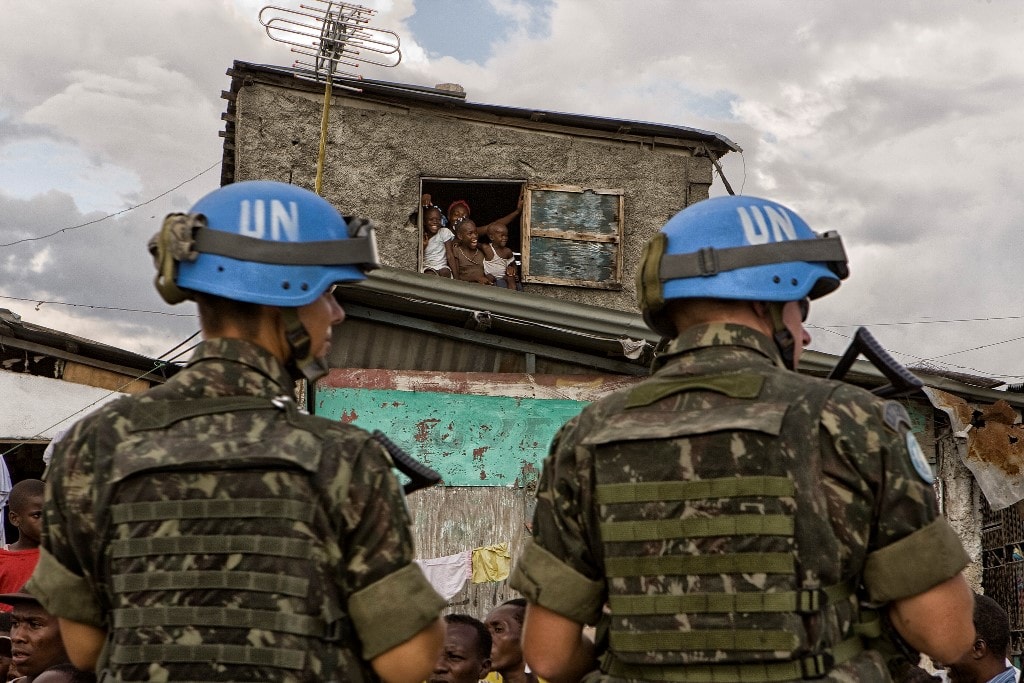
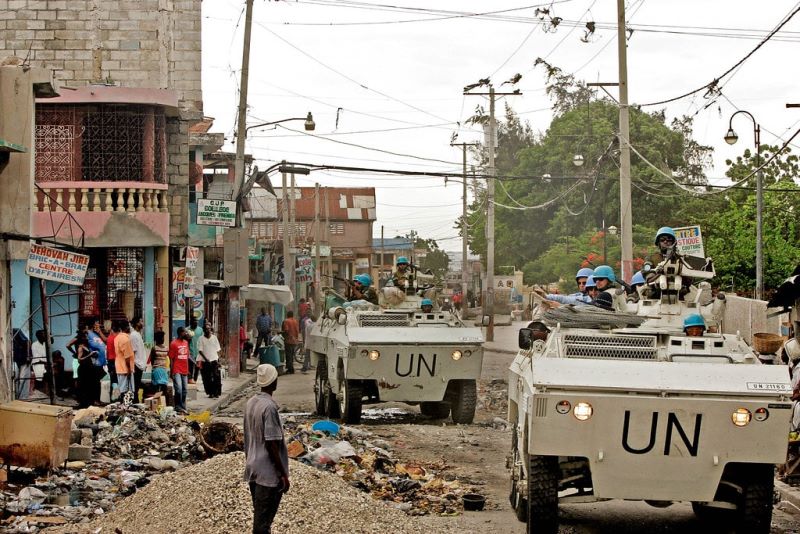
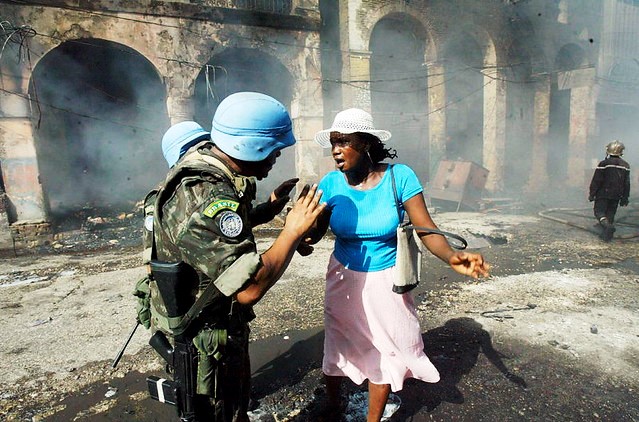
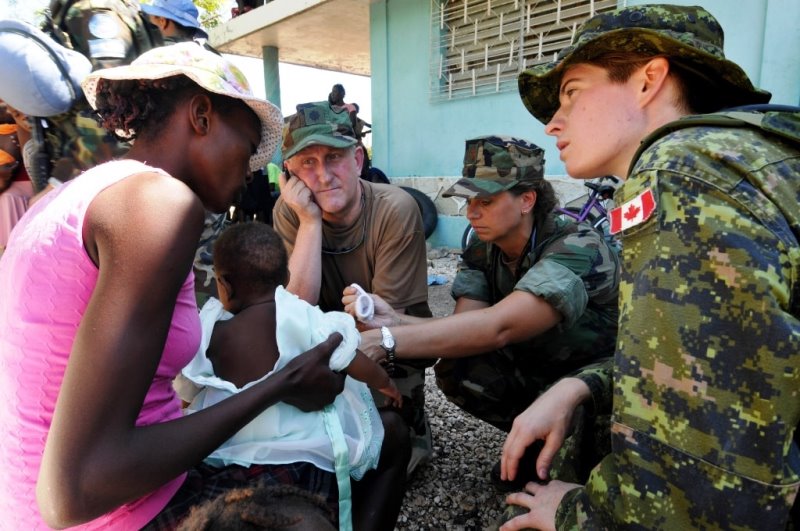
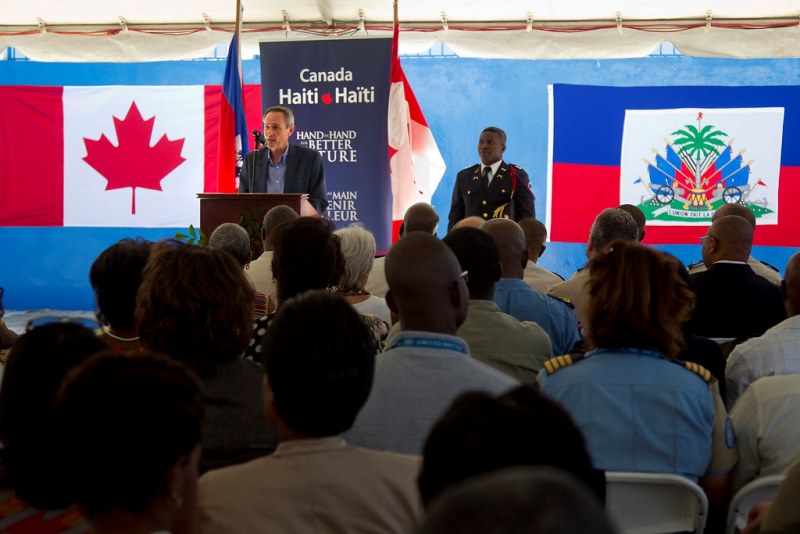
Following the debt crisis of the 1980s and forced liberalization of economies throughout the region since, Canadian capital – led by the banking and mining – has expanded rapidly through the Americas. In step with these developments, successive Canadian governments have taken more aggressive foreign policy stances toward governments perceived as threatening to Canadian and indeed global capital's interests. In 2004, the Canadian state – including Foreign Affairs, National Defense, the Canadian International Development Agency (CIDA) and the Royal Canadian Mounted Police (RCMP) – played a central role in the planning and execution of the coup against moderately left-of-centre president, Jean Bertrand Aristide, whose commitment to neoliberal policies was viewed as suspect by Canada and its allies. Canada has also been a central player in the neoliberal ‘rebuilding’ of Haiti – the economic, social and health indicators of this reconstruction demonstrate that it has been nothing short of a horrific disaster for most Haitians.

In 2009, when Manuel Zelaya – whose own neoliberal credentials, and, crucially for Canada, his support for foreign mining, were being called into question – was forced from power in a military coup, Canada took on a leading role, together with the U.S., in ensuring he wouldn't return to the presidency with any power. The Harper government then became perhaps the biggest public backer of the new hard right government of Porfirio “Pepe” Lobo, which came to power during the coup in the completely illegitimate elections of November 2009. With the assassination of government opponents a regular feature of ‘democratic’ Honduras, Canada has proceeded to sign a new free trade agreement and work behind the scenes to promote a new mining law.[12]

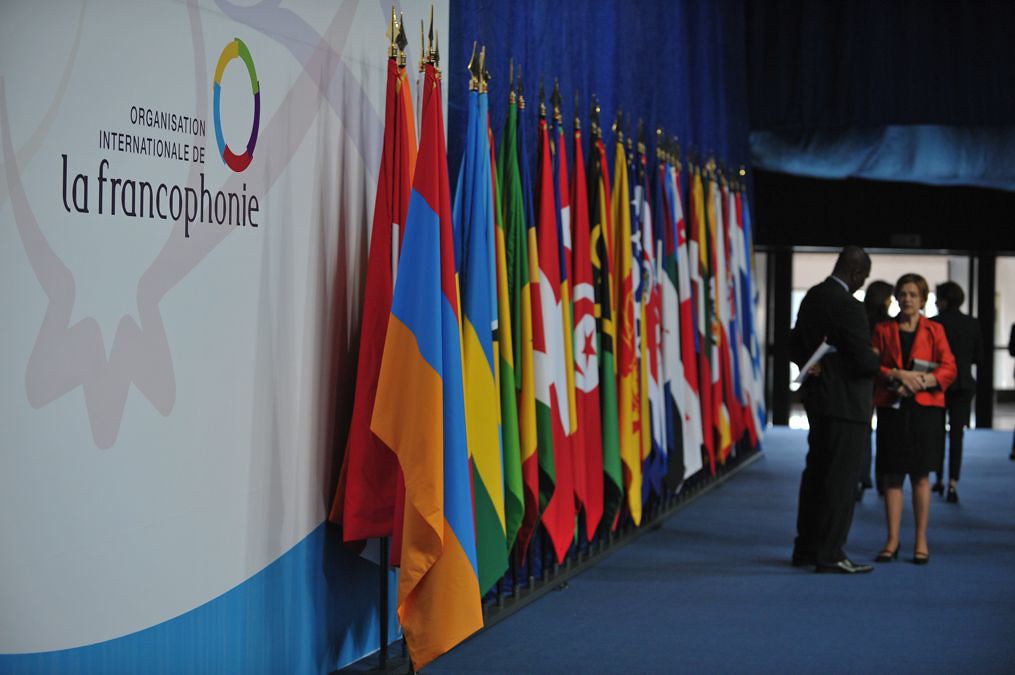
One could also contrast Canada's position on the coups in Haiti or Honduras with its response to the coup in Mali earlier this year. The Malian government was a strong regional ally of Canada. It supported Canada's mining industry, which has extensive interests in the country, and was a major development and military aid recipient. Thus the coup was an unacceptable attack on Malian democracy. Unlike any statement issued regarding the Haitian or Honduran coups, which removed democratically-elected and popular presidents from power, Canada was quick to assert that “the democratic will of the Malian people must be respected.” Unlike in Honduras, bilateral development aid – Canada is a major donor nation to Mali – was cut off quickly. And the Harper government moved aggressively to get Mali kicked out of La Franophonie.

But Canada's real politick does not brook dissent well. So the wave of moderately-left-of-centre and anti-neoliberal governments in Latin America are viewed at best with suspicion and at worst as dangerous enemies. Democracy promotion and ‘human rights’ spending has been stepped up considerably in Venezuela and Ecuador over the last several years. Possibly in excess of $200,000 (CAD) is being spent on democracy promotion in the Andes annually. In the case of Venezuela, this includes financing for groups that supported the failed 2002 coup against Hugo Chávez.

Canada has also been increasing its security spending in the region, especially in the Caribbean and Central America, where police have terrible human rights records in countries like Honduras, Guatemala, and El Salvador. While much of this spending is nominally for counter narcotics efforts, the war on drugs is often used as cover for the dispossession and repression of local campesino and indigenous communities to make way for natural resource and tourist developments, as Annie Bird argues in the most recent NACLA Report on the Americas.[13]

Thus although Canada's political and economic engagement with Paraguay has been modest compared with other countries in the region, the Harper government, looking at the broader balance of forces, is happy to see Lugo go the way of Zelaya. The Harper administration maintains a Cold War mentality toward the region – Lugo, Zelaya and Aristide were dominos that needed to fall in the appropriate direction. Harper was clear enough on this position during his first trip to South America, and the Canadian state's orientation was even more explicitly revealed in the repeated rantings of Tory MP Dave Van Kesteren in the Standing Committee on Foreign Affairs and International Development in March 2011. The Defeat of Lugo, like the defeats of Zelaya and Aristide before him, is therefore a victory for Canada and imperial interests in the Americas. The left, however moderate, has again been contained, at least for the moment.

Resistance

As in Honduras, the popular classes refuse to be casually bulldozed into submission. Secretary General of the Partido Movimiento al Socialismo (Movement Toward Socialism Party, Pmás), Rocío Casco, announced on Saturday the formation of the Frente Nacional por la Defensa de la Democracia (National Front for the Defence of Democracy, FNDD). The FNDD does not recognize the regime of Federico Franco, and brings together a wide array of popular urban social movements, leftist political parties, peasant organizations, and various participating groups within the Frente Guasú coalition that, as mentioned, first emerged to elect Lugo in 2008.[14]

“The FNDD, united in a general assembly of its members, political parties, and social movements, political leaders, and civil society, denounces the institutional breakdown of the state of law in Paraguay on the part of the most conservative and reactionary sector of the National Parliament,” reads the resistance front's first communiqué. “They have violated the fundamental principle of the right to legitimate defence and due process, utilizing concepts and practices from the Stronista dictatorship, and through these means have orchestrated the overthrow of the constitutional government of Fernando Lugo.” The communiqué goes on to suggest that, “For these reasons, the FNDD rejects and condemns the coupist government of Federico Franco and calls on all the Paraguayan people to defend the democratic process and institutionality of the republic with permanent mobilization, with the purpose of circumventing the dismissal of fundamental human rights. We call for the unity of the entire Paraguayan people, inside and outside the country, as well as solidarity from other Latin American peoples, to mobilize ourselves in a coordinated manner for the restitution of the state of law and respect for popular sovereignty in Paraguay.” •

Todd Gordon teaches in Contemporary Studies at Laurier University, Brantford, and is the author of Imperialist Canada.

Jeffery R. Webber teaches Politics and International Relations at Queen Mary, University of London, and is the author of Red October: Left-Indigenous Struggles in Modern Bolivia. They are writing a book on Canadian imperialism in Latin America and the Caribbean.

Endnotes:
1. There were 17 people killed in Curuguaty – six police and 11 peasants, with dozens more seriously injured. See Idilio Méndez Grimaldi, “Los muertos de Curuguaty y el juicio politico a Lugo,” ALAI, América Latina en Movimiento, June 23, 2012.
2. Martín Granovsky, “'Es Triste lo que ocurrió,' entrevista al canciller Héctor Timerman,” Página 12, June 24, 2012.
3. Pablo Stefanoni, “Paraguay: ¿una nueva Honduras?” Pulso, November 10, 2009.
4. Ramón Fogel, “El Gobierno de Lugo, el Parlamento y los Movimientos Sociales,” Observatorio Social de América Latina, Año X, No. 25 (April), p. 55. See also, Marielle Palau and Guillermo Ortega, “Paraguay: el nuevo scenario de disputa de los intereses populares,” Observatorio Social de América Latina, Año IX, No. 24 (October): 103-112.
5. See Charmain Levy's important forthcoming article, “Working towards Tekojoja: The Political Struggles of the Paraguayan Left,” Latin American Perspectives.
6. Ibid. While it is beyond the scope of the present article to explore, it is important to note the racialized character of the Paraguayan social formation, with 60 per cent of the population speaking exclusively Guaraní, rising to almost 85 per cent in rural areas. Economic and political power, meanwhile, continues to speak Spanish, inflected perhaps with Brazilian Portuguese, or American English.
7. Atilio Borón, “Paraguay: ¿Por qué derrocaron a Lugo?” ALAI, América Latina en Movimiento, June 22, 2012.
8. EIU, Paraguay: Country Report, London: Economist Intelligence Unit, April 2012, pp. 5-6.
9. Pablo Stefanoni, “Paraguay: Un golpe largamente planeado,” Página 7, June 24, 2012; Pablo Stefanoni, “Paraguay: ¿una nueva Honduras?” Pulso, November 10, 2009.
10. Pablo Stefanoni, “Paraguay: ¿una nueva Honduras?” Pulso, November 10, 2009.
11. Pablo Stefanoni, “Paraguay: Un golpe largamente planeado,” Pagina 7, June 24, 2012. See also the revealing Wikileak Cable Reference ID: #09ASUNCION189.
12. Todd Gordon and Jeffery R. Webber, “Canada and the Honduran Coup,” Bulletin of Latin American Research, 30, 3, 2011: 328-343.
13. Annie Bird, “Drugs and Business: Central America Faces Another Round of Violence,” NACLA Report on the Americas, 45, 1 (Spring), 2012: 35-36.
14. Javier Rodríguez Roque, “Constituyen en Paraguay Frente Nacional de Defensa de la Democracia,” Prensa Latina, June 24, 2012.